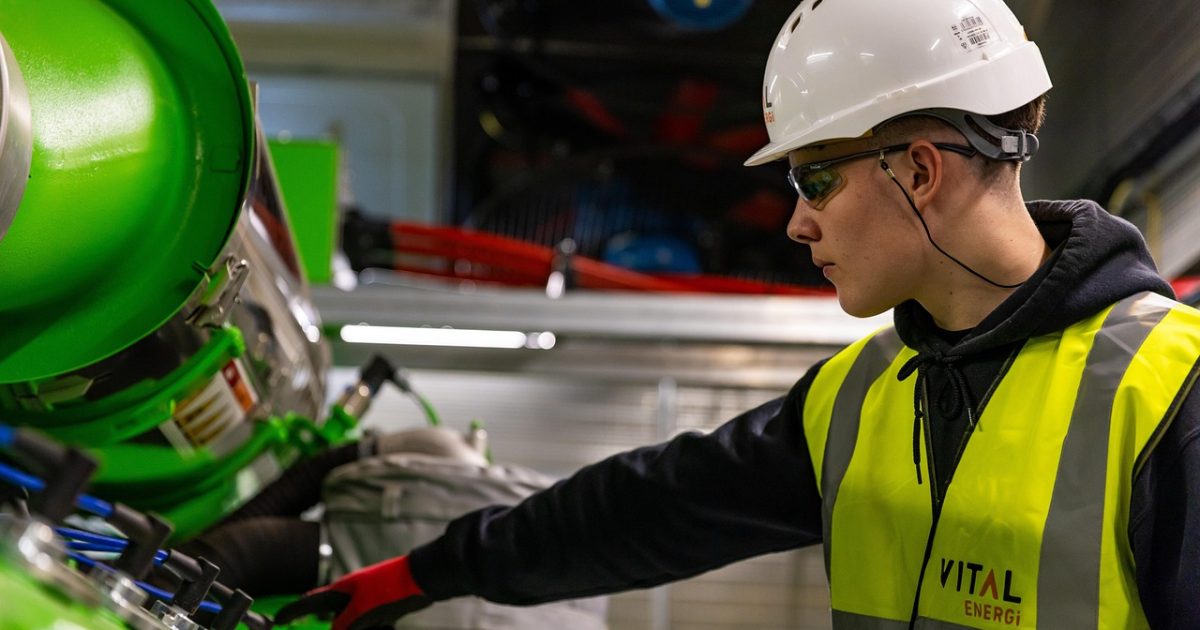

T Levels are technical courses taken after GCSEs, designed as an alternative to A levels for students who already know the kind of work they want to do. Each one focuses on a broad occupational area, such as health, education or digital, and mixes classroom study with a long placement inside a real workplace. That placement is the heart of the qualification, and for many students it happens inside a hospital, a school or a council office.
That makes T Levels unusually interesting for anyone thinking about a public-sector career. The NHS, councils, schools and nurseries all host T Level students, which means a teenager can spend a serious stretch of time inside the sort of organisation they hope to work for, before committing to a degree, an apprenticeship or a job.
This article explains what T Levels are, the routes most relevant to public services, how placements with public-sector employers work, what the qualification leads to, and how students and parents can weigh T Levels against A levels and apprenticeships. One note before we start: T Levels are an English qualification. Scotland, Wales and Northern Ireland have their own post-GCSE technical routes, so students elsewhere in the UK should check their nation's equivalents.
What a T Level actually is
A T Level is a full-time course, usually studied over two years at a college or school sixth form, starting after GCSEs. It is designed to take up a student's whole timetable, in the way a full set of A levels would, rather than sitting alongside other big qualifications.
The course has two main parts. The classroom part covers the knowledge behind the occupational area: how the health system works, how children develop, how software is built, depending on the course. The workplace part is an extended industry placement with a real employer, arranged through the college, where the student does meaningful work under supervision. Students are assessed through exams and practical projects, and the final certificate shows an overall grade.
The word "technical" puts some families off, as if it meant second-best. It should not. T Levels were built with employers so that the content matches what real jobs need, and they carry points for university entry in the same way A levels do. They are demanding courses, and the placement element asks for a level of maturity that classroom-only study does not.
The industry placement
The placement is what separates a T Level from every other classroom course. It is long, measured in weeks of working time rather than the odd taster day, and it can be arranged as day release, in blocks, or as a mix, depending on the employer and the college.
During a placement the student is not making tea. Placements have to involve real tasks that develop occupational skills, with a named supervisor, objectives and reviews. A health student might support ward routines and observe clinics. An early years student might help run activities in a nursery. A digital student might test software or help a support desk. The student stays a student throughout, insured and supervised, and the college checks in during the placement.
For the student, the payoff is threefold. You find out early what the work is genuinely like, before spending years training for it. You build the kind of concrete examples that make applications and interviews far easier. And you become a known quantity to an employer who recruits at every level, which matters more than any certificate when a vacancy appears.
T Level routes that lead towards public services
Several T Level subjects line up directly with public-sector careers.
Health and healthcare science
Health-related T Levels prepare students for support roles in hospitals, community services and care settings, with placements often hosted by NHS trusts. They lead naturally towards healthcare assistant work, healthcare assistant roles are explained in our guide, and onwards to nursing and allied health routes through apprenticeships or university.
Education and early years
The education and early years route prepares students to work with children, with placements in nurseries, primary schools and early years settings. It can lead to work as a nursery practitioner or teaching assistant, and it counts towards the qualifications the early years sector looks for. Our article on early years and nursery careers sets out where that path can go.
Digital
Digital T Levels cover areas such as software development, networking and support. Councils, NHS organisations and government bodies all employ digital staff and some host digital placements, so this route can point at a public-sector technology career as well as a private-sector one.
Construction and the built environment
Construction-related T Levels connect to the trades and technical roles that councils, housing providers and infrastructure bodies rely on: surveying, planning support, building services and site work among them.
How placements with the NHS and councils work
Public-sector employers host placements because it helps them grow their future workforce, and many have made T Level hosting part of their recruitment thinking. In practice, the college arranges the placement, the employer provides the work and the supervision, and the student agrees to workplace rules on confidentiality, safeguarding and conduct.
Placements in health, care and education come with extra safeguards, for obvious reasons. Students may need vetting checks arranged before starting, they work under supervision at all times, and there are limits on what they can do with patients, children and personal information. None of that stops the placement being real. Students on NHS placements see how wards, clinics and offices actually run, and students in schools and nurseries work with children daily under the eye of qualified staff.
If you are choosing a college, ask hard questions about placements before you enrol. Which employers do they place students with? Does the college have links with the local NHS trust or council? Placement quality varies, and it is the single part of the course most worth investigating in advance.
What a T Level leads to
A T Level is a launch point rather than a destination, and it opens three doors:
- Work. Students can apply for entry-level jobs in their field, such as healthcare support, nursery, business administration or technician roles. A placement with an NHS trust or council often turns into a genuine application advantage with that same employer.
- An apprenticeship. A T Level is strong preparation for a higher or degree apprenticeship, letting students step into paid training in nursing, early years, digital or management routes. Our article on NHS apprenticeships shows how those ladders run all the way to registered professions.
- University. T Levels carry entry points for higher education, and they fit best where the degree matches the T Level subject, such as nursing, allied health, early childhood studies or computing. Individual universities set their own entry rules, so students should check the exact requirements of any course they have in mind before choosing this route.
T Levels, A levels or an apprenticeship: how to choose
Parents and students often frame this as a ranking. It is really a question of fit, and it helps to be blunt about the differences.
Choose A levels if the student wants to keep options open, enjoys classroom study, or is aiming at a degree subject with no single technical route, since A levels remain the most flexible currency for university entry. Choose a T Level if the student has a clear occupational direction, wants substantial time in a real workplace, and intends to go into work, an apprenticeship or a matching degree afterwards. Choose an apprenticeship if the student wants to be earning now and is ready for a real job with study attached, rather than full-time education.
A few practical tests help the decision:
- Ask the destination question. What does the student want to be doing a few years from now? Work backwards from that, not forwards from what friends are choosing.
- Check the entry rules. If a specific degree is the goal, check whether the universities in question welcome the T Level for that course.
- Weigh maturity honestly. A long workplace placement rewards students who can be reliable, punctual and professional. That is a skill some sixteen-year-olds have and some grow into later.
- Visit the college and ask about placements. The quality of employer links matters as much as the syllabus.
There is no wrong door here. All three routes can end in the same public-sector career, and people switch between them more often than school league tables suggest.
Placements and first qualifications turn into careers when a real vacancy appears. When that time comes, you can see current entry-level and experienced openings across the NHS, councils, schools and government on our public-sector jobs board, including NHS roles of the kind health and care students often start in.
Sources and further reading
- T Levels (official site) — the official government site for T Level courses and placements.
- What qualification levels mean (GOV.UK) — how T Levels, A levels and apprenticeships compare in level.
- Find an apprenticeship (GOV.UK) — the official apprenticeship vacancy service for England.
- National Careers Service — free, government-backed careers advice for students and parents.
This article is general careers information, not formal advice. Always check the official source and the specific job advert for current details.